Our mission

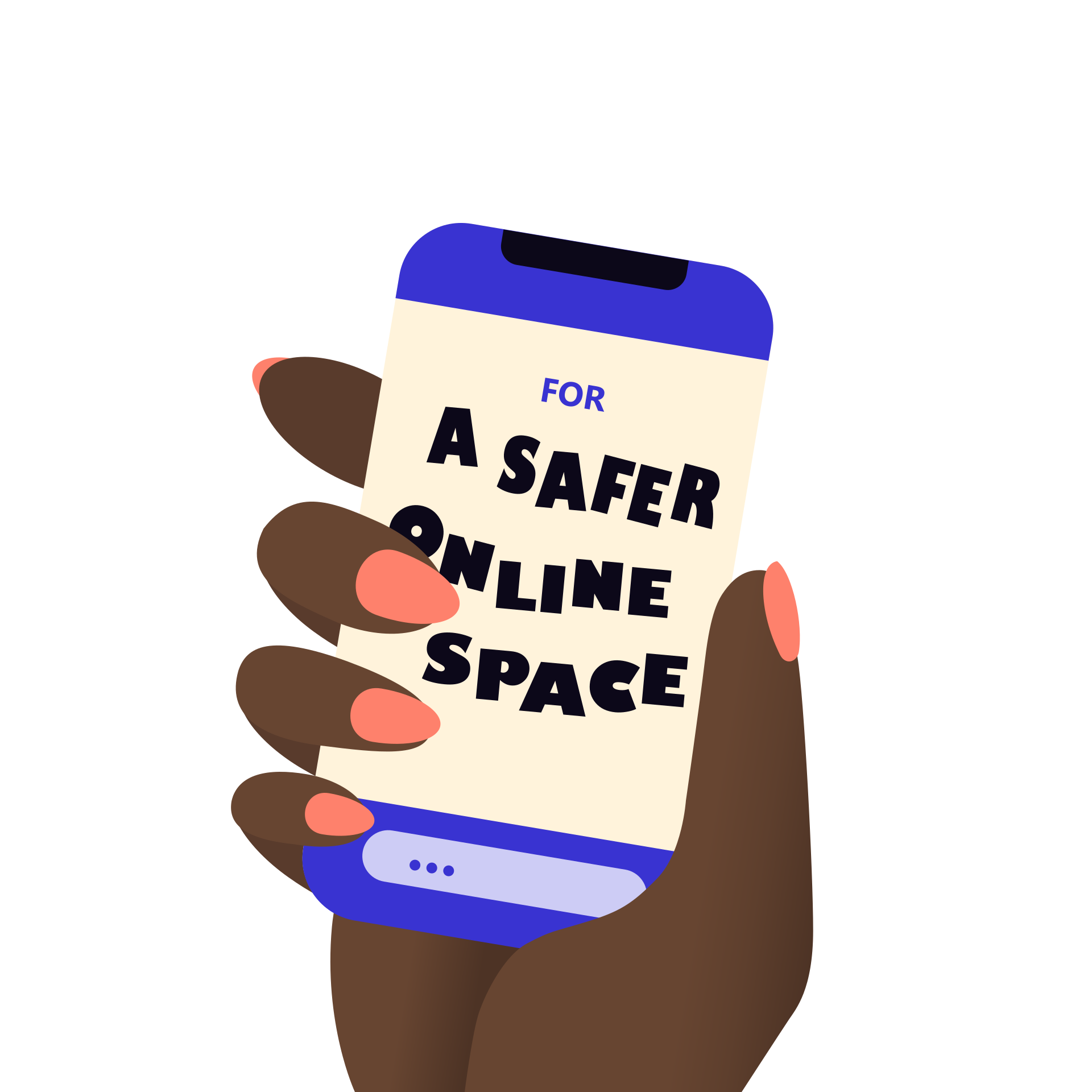
Our goal is to make social media platforms a safer place for women, girls, and gender-non binary individuals, so that they may freely express themselves, participate in the public sphere, and enjoy equal opportunities without fear of discrimination or violence. 

Why are we doing this?

We cannot let harassment and abuse prevail. Online gender-based violence (OGBV) is an increasingly prevalent and harmful phenomenon whereby women, girls, and non-binary people are unsafe on the internet, engage in self-censorship, and are excluded from public fora. See the page on OGBV for more information.

About Us

The ScrollSafe team is composed of six international professionals all working in the fields of human rights, democracy, and development working at ARTICLE 19, a global human rights organisation and GIZ, the German development agency. We banded together in 2021 to collaboratively find a solution to the growing issue of online gender-based violence (OGBV) on social media platforms. Partnering with Feminist Internet and KICTANet we developed a set of prototypes, localised them for Kenya, and adapted them to Twitter as the target social media platform, given its relevance for women in the public domain, whether it be in the realm of politics, media, activism, or entertainment.

The prototypes, which visualize what such a solution might concretely look like were developed based on the Tech Policy Design Lab, or “techlab”, led by the Web Foundation and Feminist Internet in 2020. The techlab was a process involving consultations with prominent human rights organisations, social media companies, regulators, and think tanks, which culminated in a first iteration of conceptual personas and prototypes, off of which ScrollSafe was developed and localised.

Special thanks to all the techlab contributors, and specifically to Glitch UK, Chayn, and PEN America for their advice and guidance on early versions of ScrollSafe.

The partners

GIZ

or the German Corporation for International Cooperation GmbH) is a German development agency that provides services in the field of international development cooperation.

Feminist Internet

is an art activist collective devoted to making the internet a more equitable space for women and other marginalized groups through creative, critical practice.

Chayn

is a global non-profit, run by survivors and allies from around the world, creating resources to support the healing of survivors of gender-based violence. Chayn create open, online resources and services for survivors of abuse that are trauma-informed, intersectional, multi-lingual and feminist.

ARTICLE 19

is a leading human rights organisation founded in 1987 that works for a world where all people everywhere can freely express themselves and actively engage in public life without fear of discrimination.

KICTANet

is a Kenyan policy think tank involved in ICT policy and regulation. The organisation strives to ensure that policy making in the ICT sector adopts an open, accessible, human rights-based approach that is characterized by multi-stakeholder participation.

Glitch

is an award-winning UK charity, ending online abuse and championing digital citizenship. They have a particular focus on women and marginalised people through training, research, workshops and community building,

Mission Statement

What do we hope to achieve? Our goal is to make social media platforms a safer place for women, girls, and gender-non binary individuals, so that they may freely express themselves, participate in the public sphere, and be themselvesenjoy equal outcomes without fear of discrimination or violence.  Why are we doing this? Online gender-based violence (OGBV) is an increasingly prevalent and harmful phenomenon whereby women, girls, and non-binary people are unsafe on the internet., engage in self-censorship, and are excluded from public fora. See the page on OGBV for more information.